The Last Elevator Operator Knows Your Name: Why Chicago's Vanishing Traditions Might Be Its Best Community Glue
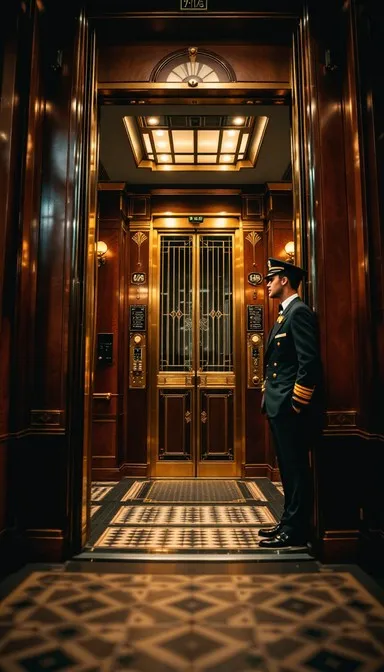
Photo: vintage brass cage elevator operator Chicago historic building, via images.stockcake.com
There's a particular sound an old cage elevator makes — a mechanical sigh, a rattle of brass gates — and if you've heard it in Chicago, odds are you were riding with Stan.
Stan has run the hand-operated elevator in a century-old Loop building for 31 years. He knows which tenant gets off on four, which accountant hates small talk on Mondays, and which delivery guy is up for a conversation about the Cubs no matter the season. When he retires next spring, the building will automate the car. Nobody will blame them. But something will be gone.
That's the tension at the heart of this story: Chicago keeps getting more convenient, and in the process, it keeps getting slightly less ours.
The Pawn Shop With a Bookshelf
Start on the near northwest side, where a family-run pawn and loan shop has anchored the same corner since 1978. Behind the display cases of watches and guitars sits something you won't find at any big-box store: a battered bookshelf, free to browse, stocked by regulars.
"People come in to hock a tool, they leave with a paperback," the owner's daughter told us, shrugging like it was nothing. "My dad started it because guys would hang around talking anyway. He figured they might as well read."
That's the pattern you find over and over when you go looking for Chicago's vanishing institutions: the thing they sell is almost secondary. The pawn shop is a lending library. The shoe repair guy on Clark is an informal notary, marriage counselor, and weather station. The tavern with the 1962 lease doubles as a lost-and-found, a bulletin board, and a place where a widower named Ray gets a birthday card signed by 40 people who technically just came in for a beer.
What Convenience Actually Costs
We want to be careful here — nobody's romanticizing inefficiency for its own sake. Self-checkout is faster. Apps are easier. If you need a package notarized at 9 p.m., bless the 24-hour spot.
But there's a real trade happening, block by block. Every transaction that used to involve a person now involves a screen, and every screen-swapped transaction is one fewer chance to be recognized. Sociologists have a clunky term for it — "weak ties" — but the concept is simple: the casual, repeated, low-stakes relationships with the people you brush past are what make a neighborhood feel like a neighborhood. Research consistently links these ties to feeling safer, happier, and more rooted in where you live.
The elevator operator isn't a luxury because he's charming. He's infrastructure — social infrastructure. So is the hardware store owner who tells you which anchor bolt actually works in Chicago brick. So is the barbershop that's been on the same stretch of 79th Street since the days when the el fare was a quarter.
The People Fighting Back (Politely)
Here's the good news: Chicago has always been good at holding on.
We met the woman who runs a monthly "repair café" in Avondale, where volunteers fix lamps, blenders, and hemmed pants for free — not because anyone can't afford a replacement, but because fixing things together is a reason to be in a room. We talked to the third-generation owner of a West Ridge candy shop who still hand-writes birthday cards for every kid on her list, some of whom are now bringing in their own children. We heard about the South Side barbershop that keeps a wall of Polaroids going back to 1991, a literal archive of everyone who ever sat in chair two.
None of these people describe themselves as activists. They just keep showing up, and their customers keep showing up, and the math works out.
There are ways to help that don't require heroics:
- Choose one errand a week to do in person, at an independent spot, and actually talk to whoever's behind the counter.
- Tip in conversation, not just cash. Ask the cobbler how long they've been there. They will tell you, and it will be a great story.
- Write a review that mentions a person by name, not just "great service." Small businesses live and die by those.
- Show up to the unglamorous stuff — the block club meeting, the library branch's evening event, the shop's anniversary sale nobody thinks anyone attends.
Nostalgia Is Not the Point
It would be easy to write this piece as a eulogy — the sad march of progress, the good old days, all of that. But the people we met aren't nostalgic. They're practical. Stan the elevator operator doesn't want a plaque; he wants the building's new tenants to say hello. The pawn shop's lending shelf isn't a museum exhibit; it gets restocked weekly.
That's the forward-looking part. The traditions worth saving aren't the ones frozen in amber — they're the ones still being used. An elevator operator only exists as long as someone rides with him. A bookshelf only lives if someone leaves a book.
Chicago has never been a city that pretends to be small. It's a city of 77 neighborhoods and 2.7 million people, and it will never feel like a small town in the postcard sense. But it can feel like a small town in the way that matters: a place where the person behind the counter looks up, smiles, and says your name before you've said theirs.
That's not nostalgia. That's a choice we make one errand, one elevator ride, one borrowed paperback at a time.