Staying Put on Purpose: The Longtime Residents Who Hold Chicago Together
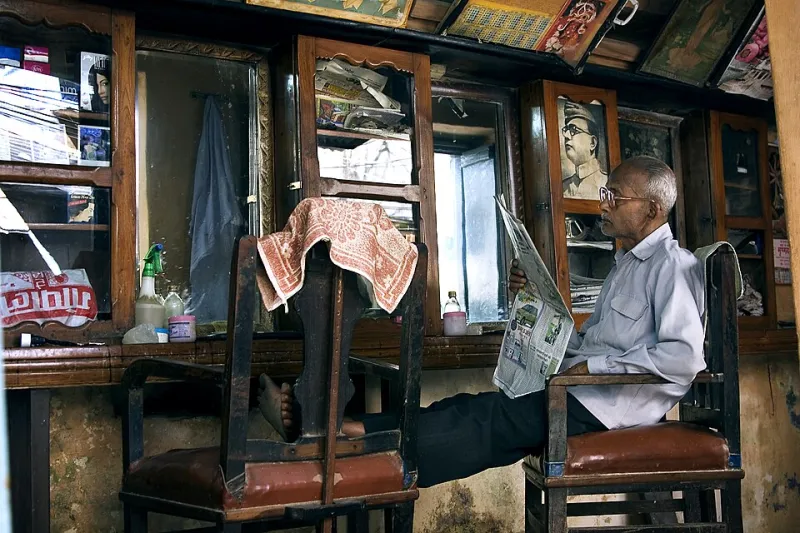
Photo: Jorge Royan, CC BY-SA 3.0, via Wikimedia Commons
There's a specific kind of Chicagoan you'll recognize in every neighborhood if you pay attention long enough. They're the ones who remember when the laundromat was a butcher shop. They know which landlord actually fixes the heat and which one just promises to. They've watched three different coffee shops occupy the same corner — and they can tell you why each one closed.
Call them what you want — fixtures, lifers, the folks who never got the memo about moving on. We've started calling them anchors, because that's exactly what they do. In a city where the median stay in an apartment is measured in a couple of years, the people who remain for thirty are holding something in place that the rest of us benefit from whether we realize it or not.
The Memory Keepers of 26th Street
Take a walk through Little Village on a Saturday morning and you'll pass shops whose owners have been behind the same counter since the Reagan administration. The corner grocery where your produce comes with unsolicited advice about what's actually in season. The tamale vendor who has watched an entire generation of kids grow up, graduate, and bring their own children back.
These aren't just businesses. They're institutions of informal knowledge. Ask the grocer where to find a decent mechanic, and you'll get an answer better than any five-star review. Ask them about the block party in July, and they'll tell you who to talk to — because they're the one who organized the first one in 1994.
That's the thing about anchors: they function as living archives. Newcomers arrive with a search engine and a leasing app. Anchors arrive with thirty years of accumulated context about what works here and what doesn't, who to trust and who to politely avoid, which alderman's office actually returns phone calls.
Why Staying Became Radical
Somewhere along the way, American culture decided that leaving was ambition and staying was stagnation. Chase the job. Follow the opportunity. Update the LinkedIn location and call it growth. Chicago — a city built on waves of migration, where half the population seems to have an expiration date on their lease — absorbed that logic completely.
But there's a counterargument unfolding on front porches in Auburn Gresham and in barbershops in Bridgeport. Staying, done deliberately, is its own form of investment. It's compounding interest paid in relationships rather than dollars.
Consider the barber who has cut three generations of the same family's hair. He doesn't just know their fades — he knows when the dad lost his job, when the daughter got into Jones College Prep, when the grandmother stopped driving. That's not a transaction. That's a web. And webs like that don't form between people who swap neighborhoods every two years.
Researchers who study community resilience keep landing on the same finding: social ties are the infrastructure that holds neighborhoods together during hard times. When a block floods, when a school closes, when a pandemic empties the streets, it's the rooted people who check on the elderly neighbor, who know which family needs groceries, who show up. Money can't buy that. An app can't deliver it.
What Anchors Know That the Rest of Us Don't
Spend an afternoon talking with a longtime resident of, say, Hegewisch or Pilsen and a few themes keep surfacing.
They think in decades, not leases. Anchors make decisions — painting the porch, planting a tree, confronting a slumlord — based on how the block will look in twenty years. That long horizon changes everything about how they show up.
They treat small interactions as deposits. The wave to the mail carrier. Learning the dog's name. Remembering that the lady in 2E had surgery. None of it is remarkable in isolation. Together, it's a social safety net woven one hello at a time.
They stay through the boring parts. Anyone can love a neighborhood during summer festival season. Anchors are there in February when the side streets haven't been plowed and the el is delayed. Their loyalty isn't conditional on the neighborhood being trendy.
A Field Guide for the Newly Arrived
So you just signed a lease in a neighborhood where you know exactly zero people. Here's the honest advice the anchors would give you, if you asked:
Find the anchor first. Every block has one — the person watering their garden at 7 a.m., the shop owner who's behind the counter every single day, the guy on the porch who nods at everyone. Introduce yourself. Not with an agenda. Just: "I'm new here. What should I know?" You will get more useful information in ten minutes than in ten weeks of scrolling neighborhood Facebook groups.
Then become a small anchor yourself. You don't need thirty years of tenure to contribute. Pick a spot — the coffee shop, the dog park, the CTA platform — and be reliably there. Consistency is the whole trick. Belonging isn't something a neighborhood grants you; it's something you build by showing up until your presence becomes expected, then welcomed.
The Case for Rootedness
Chicago will always be a city of arrivals. That's its engine and its glory — the new restaurants, the fresh energy, the constant remix. Nobody's arguing we should all stay in our childhood apartments.
But a city of only newcomers is just a hotel with good restaurants. What makes a neighborhood a neighborhood is the friction of deep history — people who knew the place before it was cool and will know it after it isn't. They are the reason the block party has a permit, the reason the community garden has water access, the reason someone notices when your porch lights haven't come on in a while.
The next time you walk past that shop that's been there forever, do more than walk past. Go in. Ask a question. Listen to a story that starts with "back in '85."
You might just learn why the best way to belong to a city is to stop treating it like a stopover — and start treating it like home, even if home takes thirty years to fully earn.