Reclaimed and Reimagined: Inside Chicago's Artist Collectives Turning Empty Buildings Into Community
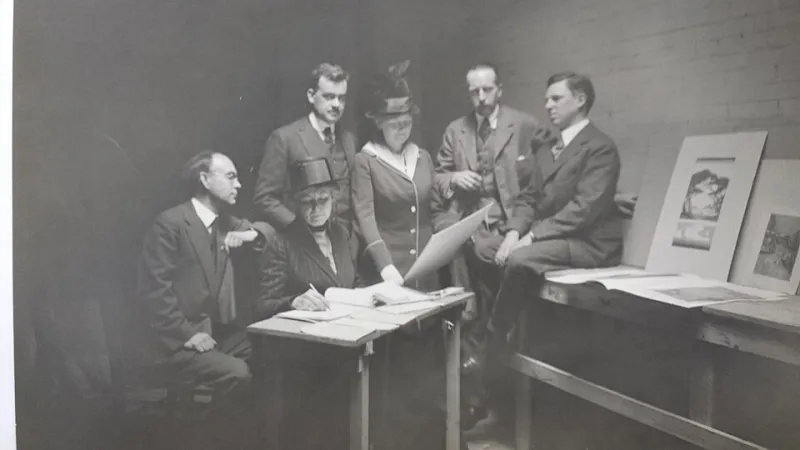
Photo: NLShepard, Public domain, via Wikimedia Commons
The building on the edge of Humboldt Park didn't look like much from the street. Boarded windows, a faded mural from some previous tenant, a parking lot slowly being reclaimed by weeds. But step inside on a Friday evening and you'd find something else entirely: a ceramicist firing pieces in a kiln improvised from salvaged parts, a muralist projecting reference images onto a half-finished wall, three musicians running cables across a concrete floor, and somewhere in the back, someone making coffee for everyone.
This is what the underground creative collective looks like in Chicago. Not glamorous. Not funded. But alive in a way that a lot of more polished spaces simply aren't.
The Geography of the Forgotten
Chicago's creative collectives tend to cluster in the city's economic margins — not because artists romanticize poverty, but because that's where the available space is. Englewood, Austin, North Lawndale, pockets of the South and West sides where decades of disinvestment have left behind vacant warehouses, shuttered storefronts, and industrial buildings that nobody else wanted.
For collectives like Spacelab Chicago and the loosely organized network of studios operating under the name The Gray City Project, these spaces represent both a challenge and an opportunity. The challenge is obvious: no heat in winter, uncertain legal status, the constant threat of a developer showing interest. The opportunity is something harder to quantify — the freedom that comes from building something outside the official channels.
"When you're not beholden to a grant committee or a gallery owner, you make different work," says Amara, a 28-year-old sculptor and co-founder of a collective operating out of a former auto body shop in East Garfield Park. "You make the work you actually want to make. And then you find the people who want to make that kind of work too, and suddenly you have a community."
Collaboration as the Foundation
What distinguishes these collectives from a simple shared studio arrangement is the degree to which the work itself becomes communal. Members aren't just renting adjacent desks — they're actively building on each other's ideas, showing up to each other's openings, hauling equipment at midnight for a pop-up that wasn't announced until 48 hours before.
At a collective in Pilsen that asked not to be named due to its informal lease situation, a textile artist, a documentary filmmaker, and a spoken word poet have spent the last year developing a collaborative project about neighborhood displacement. None of them came in with that plan. It emerged from proximity.
"You can't plan the conversations that actually matter," says Dre, the filmmaker in the group. "You just have to be in the same space long enough for them to happen."
That ethos — that physical togetherness produces something intangible but essential — runs through almost every collective in the city. It's a quiet rebuke to the idea that creative work is fundamentally solitary, or that community can be built through a screen.
The Neighborhood Dimension
These collectives don't exist in a vacuum. They're embedded in neighborhoods with their own histories, their own politics, their own complicated relationships with the word "revitalization." And the good ones know it.
Several collectives have made explicit community engagement part of their operating model — not as a PR exercise, but as a genuine exchange. Free workshops for local teenagers. Open studio nights where neighbors can walk in and see what's happening. Murals painted in consultation with longtime residents rather than installed without conversation.
"We're guests here, in a sense," says Marisol, a printmaker and co-organizer of a collective in Little Village. "This neighborhood has its own creative culture, its own artists, its own history. Our job isn't to bring art to the community. It's to be in the community and see what we can make together."
That distinction — between parachuting in and genuinely belonging — is one the Chicago creative underground takes seriously, even if not every collective gets it right.
What Gets Built When Money Isn't the Point
One of the more striking things about spending time in these spaces is how little the conversation centers on career advancement. There's no talk of representation deals or gallery placements or building a personal brand. The currency here is different: time, skill, trust, presence.
"I've been in fancy studios," says Jordan, a painter who spent two years in a well-funded artist residency before joining a collective in Bronzeville. "And they're great, don't get me wrong. But there's something missing when everyone is focused on their own trajectory. Here, we're focused on each other. On the work. On what we're building in this specific place."
That sense of shared investment — in a space, in a neighborhood, in each other — is what makes these collectives feel less like professional networks and more like something older. A guild, maybe. Or just a group of people who decided to stop waiting for permission and start making something real.
How to Find Your People
If you're an artist — or someone who makes things and hasn't figured out what to call it yet — Chicago's underground creative scene is more accessible than it looks from the outside. It's not a closed club. It's just not advertised on billboards.
Start by showing up. Open studio nights, pop-up shows, community art markets in neighborhoods like Pilsen, Bronzeville, and Humboldt Park are the entry points. Follow the collectives that interest you on social media, but more importantly, walk through their doors when they're open. Bring something to offer — a skill, a willingness to help move furniture, a decent playlist.
Belonging in Chicago's creative underground isn't granted. It's built, slowly, in the same way the spaces themselves are built: with whatever's available, by people who showed up and decided to stay.
The buildings might be abandoned. The communities inside them are anything but.