Beyond Wicker Park: The Chicago Neighborhoods Where Young Professionals Are Actually Putting Down Roots
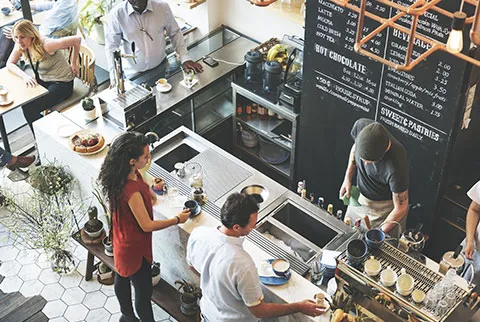
Photo: young professionals gathering in Chicago neighborhood coffee shop community, via mo2properties.com
The Search for Something Real
Every Chicagoan knows the script. You move to the city, you end up in Logan Square or Wicker Park because someone on Reddit told you to, you spend two years at the same three bars, and then you wonder why you still feel like a stranger. The city is enormous, the winters are brutal, and somehow you're still eating dinner alone on a Tuesday.
But something's shifting. A growing number of young professionals — people in their mid-20s to late 30s — are deliberately sidestepping the obvious neighborhoods and planting themselves somewhere quieter, somewhere with a little more texture. They're not chasing clout. They're chasing connection.
We talked to residents across some of Chicago's more undersung communities to find out where that connection is actually happening — and more importantly, how newcomers can tap into it.
Bridgeport: Old-School Chicago Energy With a New Crowd
Bridgeport has a reputation, and most people under 35 haven't looked past it. That's their loss.
The neighborhood on the South Side — historically known as a working-class, politically connected enclave — has been quietly attracting a younger, more diverse crowd over the last several years. Rents are still reasonable. The architecture is beautiful in a no-nonsense way. And the community infrastructure? Genuinely impressive.
Marcus, 29, a graphic designer who relocated from Pilsen two years ago, puts it simply: "I knew one person here when I moved. Now I have a whole crew. That happened because of the coffee shop on 31st, honestly. I started going every Saturday morning and people just... talked to me."
That coffee shop is Bridgeport Coffee, and it functions less like a caffeine dispensary and more like a neighborhood living room. Regulars know each other by name. The staff remembers your order and your job situation. It's the kind of place that used to exist everywhere and now feels almost radical.
For newcomers, the Bridgeport Alliance hosts regular neighborhood clean-ups and social events that are genuinely low-pressure entry points. You don't need to know anyone. You just need to show up.
Avondale: The Creative Middle Ground Nobody's Overrun Yet
Sit Avondale right between Logan Square and the Northwest Side and you get a neighborhood that feels like it's still figuring itself out — in the best possible way. It's got a strong Mexican-American cultural identity, a growing arts scene, and a block-by-block intimacy that bigger, trendier neighborhoods lost years ago.
Sophia, 32, a nurse practitioner, moved to Avondale after feeling like she was "performing a version of herself" in her old neighborhood. "Everyone I knew was optimizing their social lives. It felt exhausting. Avondale is different. My neighbors wave. The woman at the panadería knows my kids' names. It sounds small but it adds up to something."
The Avondale neighborhood association is active and approachable. Their annual block parties draw hundreds of residents across demographic lines, and they maintain a genuine culture of welcoming newcomers rather than treating them like gentrifiers to be tolerated.
For those looking to get plugged in fast, the Avondale Arts Council runs open studio nights and community mural projects that have become reliable social hubs for creative professionals who want substance over scenery.
Pilsen's Northern Edge and the Lower West Side: Still Rooted, Still Welcoming
Pilsen proper gets plenty of attention, but the streets just north of the neighborhood's core — bleeding into the Lower West Side — offer something a little less curated. The murals are still everywhere. The tamales are still incredible. But the foot traffic is lighter and the conversations tend to go deeper.
Jordan, 27, a public school teacher who moved here from the suburbs three years ago, says the key was getting involved before he felt ready. "I volunteered at a community garden on 18th Street before I even knew anyone. By the end of the summer, those were my people. I didn't have to manufacture friendship — it just happened because we were doing something together."
That community garden — run through a local nonprofit — is one of several low-barrier entry points in the area. The National Museum of Mexican Art also runs volunteer and programming opportunities that consistently bring together residents who care about culture, community, and showing up for each other.
Jeffery Manor and the Far South Side: Chicago's Best-Kept Secret
Okay, this one requires some honest conversation. The Far South Side neighborhoods — Jeffery Manor, South Shore, Pill Hill — are predominantly Black communities that have historically been ignored by the city's investment infrastructure. That's a real and ongoing injustice. It's also why some young Black professionals are intentionally choosing to live there: to be part of communities where they feel seen, and to contribute to neighborhoods that deserve more than they've been given.
Darius, 34, an attorney, moved to Jeffery Manor four years ago after growing tired of being one of very few Black residents in his previous neighborhood. "I wanted to be around my people. I wanted my kids to grow up with that. And honestly, the community here is stronger than anywhere I've lived. People look out for each other in a real way."
Organizations like the South Shore Cultural Center and local block clubs provide regular programming that centers community-building. For anyone considering this part of the city, the key is approaching with genuine investment — not as an outsider looking for cheap rent, but as someone ready to be a neighbor.
How to Actually Break In (No Matter Where You Land)
Here's the honest truth about finding community in any Chicago neighborhood: it doesn't happen by osmosis. You have to be a little intentional, a little brave, and a little willing to look like the new person for a while. That's okay. Everyone was new once.
A few things that consistently work:
Find your third place and be consistent. Whether it's a coffee shop, a library branch, or a local diner — go regularly. Same time, same days. Familiarity breeds conversation.
Go to the block club meeting. Yes, really. They're not as boring as you think, and they're full of people who care deeply about where they live.
Volunteer locally before you feel settled. Don't wait until you feel established. Community gardens, neighborhood clean-ups, and local festivals are specifically designed to bring strangers together around shared purpose.
Follow your neighborhood's social media groups. Chicago's neighborhood Facebook groups and Reddit threads are genuinely active and often the fastest way to find out what's happening and who's doing it.
Ask for recommendations like you mean it. When someone tells you about their favorite taco spot or the best walking path, actually go. Then report back. That's how acquaintances become friends.
Chicago is a city that rewards loyalty. Pick a neighborhood — not because it's trendy, but because something about it feels like you — and then show up for it. Consistently. The belonging follows.