The Third Place Theory: Chicago Spots Where You Stop Being a Regular and Start Having a Crew

Photo: Internet Archive Book Images, No restrictions, via Wikimedia Commons
Home is the first place. Work is the second. And then there's everything in between — the third place, as sociologist Ray Oldenburg called it back in the '80s — the informal gathering ground where community actually gets made.
Not at organized events. Not through apps. Not at networking happy hours where everyone's handing out business cards. In third places, belonging sneaks up on you. You show up for the coffee or the climbing wall or the craft supplies, and somewhere along the way, you end up with a group chat and standing Saturday plans.
Chicago, for all its size and occasional emotional coldness, is genuinely rich with these spaces. You just have to know where to look — and maybe what to look for.
What Makes a Space Magnetic
Not every coffee shop becomes a community. Not every gym spawns a friend group. The third places that actually work tend to share a few qualities: they're accessible without being transactional, they reward repeat visits, they have some built-in reason to interact with strangers (a shared activity, a communal table, a resident cat), and crucially, they're run by people who give a damn about the humans coming through the door.
Price matters, too. The best third places aren't exclusive. They're the kind of spots where you can stay for two hours without feeling like you owe anybody anything.
With that framework in mind, here's a neighborhood-by-neighborhood look at where Chicagoans are genuinely finding their people.
Logan Square: The Indie Bookstore as Living Room
There's a reason certain independent bookstores become neighborhood institutions while others stay just… stores. The ones that cross over into third-place territory tend to host things: author readings, book swaps, zine fairs, monthly discussion groups that welcome walk-ins. They have staff who remember your face and ask what you thought of the last thing they recommended.
In Logan Square, a handful of shops have cracked this code. Regulars describe a specific phenomenon: you come in for a book, you end up in a 40-minute conversation with someone browsing the same shelf, and six months later that person is at your birthday party. It sounds improbable. It keeps happening.
The through-line is almost always a recurring event — something that gives people a reason to come back on the same day, at the same time, and gradually recognize each other's faces.
Avondale: The Climbing Gym Effect
Rock climbing gyms have become one of the more surprising community incubators in cities across the country, and Chicago is no exception. Something about the sport — you need spotters, you celebrate each other's sends, you spend a lot of time standing around waiting and talking — creates natural openings for connection that a treadmill at a big-box gym simply doesn't.
Several Chicagoans pointed to climbing gyms, particularly those in the northwest neighborhoods, as places where they built their first real social circle after moving to the city. One woman who relocated from the East Coast described showing up alone, repeatedly, until the faces became familiar. "I didn't join a climbing club or anything. I just kept going," she says. "Eventually someone asked if I wanted to try a route together. That was three years ago. That person was at my wedding."
The lesson isn't specific to climbing. Any activity-based space where competence builds gradually — pottery studios, martial arts gyms, community gardens — tends to generate the same slow-burn social chemistry.
Bridgeport: The Hardware Store That Isn't Just a Hardware Store
This one might surprise you. Some of Chicago's most beloved third places don't look like gathering spots at all from the outside. A family-owned hardware store in Bridgeport has become, over decades, a de facto community hub for the surrounding blocks — a place where neighbors compare notes on renovation projects, argue about the Cubs, and catch up on everything happening on the street. The owner knows everyone's name. There's a folding chair near the register that's been occupied by rotating neighborhood elders for as long as anyone can remember.
You can't manufacture this. But you can recognize it when you see it, and you can choose to spend your money there instead of at the big-box alternative.
Andersonville and Edgewater: Coffee Shops With Staying Power
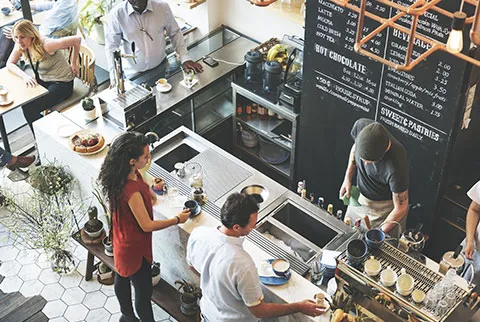
Not all coffee shops are created equal, and the ones that generate genuine community tend to have a few things in common: communal seating that encourages interaction, staff with actual longevity (not a revolving door of temporary employees), and a tolerance — even an encouragement — of people who linger.
Along the Clark Street corridor in Andersonville and into Edgewater, several spots have cultivated this quality deliberately. One café hosts a weekly "no laptops" morning — an increasingly countercultural move that has, perhaps unsurprisingly, become one of the most reliably social hours of the week for regulars. When you take away the screen, people talk.
Maker Spaces: The New Community Center
Across neighborhoods from Humboldt Park to the Near West Side, maker spaces — shared workshops equipped with woodworking tools, laser cutters, 3D printers, sewing machines — have emerged as some of the most genuinely cross-demographic gathering spots in the city. They draw people who might never otherwise share a room: retirees learning new skills, young designers prototyping products, hobbyists, artists, small-business owners.
The shared equipment creates instant common ground. You need help with the laser cutter; someone shows you. You're working on something interesting; someone asks about it. The transactions are low-stakes and the interactions are organic in a way that's genuinely rare.
How to Find Your Third Place
If you're newer to the city, recently moved neighborhoods, or just feel like your social world has calcified a little — this is the practical part:
- Go somewhere more than twice. Third places only work if you show up consistently. One visit makes you a customer. Ten visits make you a regular.
- Put your phone away. Even briefly. Make eye contact. Nod. Say something about the thing you're both there for.
- Look for programming. A space that hosts recurring events is a space that's actively trying to build community. That's a good sign.
- Follow the energy of the staff. The places where employees genuinely like being there tend to be the places where customers end up liking each other.
Belonging in a big city rarely arrives as a grand gesture. It accumulates in small rooms, over repeated visits, through the gradual recognition of familiar faces. Chicago has no shortage of places willing to be that room for you.
You just have to walk through the door — and then keep coming back.