Tap Room Thinkers: The Dive Bars Where Chicago Gets Philosophical
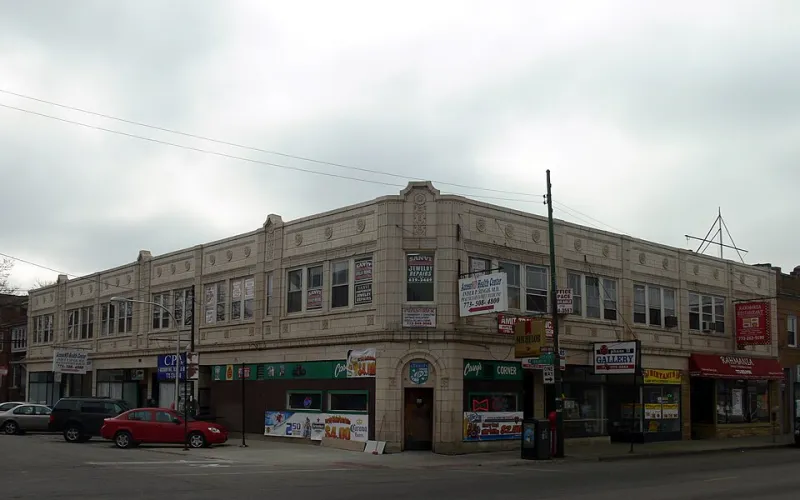
Photo: Steve Browne & John Verkleir from Chicago, United States, CC BY 2.0, via Wikimedia Commons
There's a particular kind of magic that happens around 9 p.m. on a Tuesday at a good dive bar. The jukebox is playing something nobody chose deliberately, the lighting is doing everyone a favor, and somewhere between the second and third round, the conversation stops being small and starts being real.
Chicago has always had a reputation as a city that works — but it's also always been a city that talks. And not just the polished, TED Talk variety of talking. The raw, unscripted, occasionally loud kind. The kind that happens at places like Lottie's Pub in Bucktown, Rainbo Club in Ukrainian Village, or Phyllis' Musical Inn just a few blocks east. These aren't cocktail bars with a concept. They're rooms where people end up, and somehow, they end up staying.
The Bar Stool as a Great Equalizer
Walk into Lottie's on a weekday evening and you'll find a city in miniature. A retired CPS teacher nursing a Hamm's next to a freelance graphic designer who just moved from Atlanta. A union electrician talking Bears stats with a grad student writing her dissertation on urban migration. Nobody introduced themselves formally. Nobody had to.
"This bar doesn't care what you do for a living," says Marcus, a 54-year-old who has been coming to Lottie's for nearly two decades. "You sit down, you're just a person. And weirdly, that's when people start saying the most interesting things."
There's something to that. Stripped of professional context — no LinkedIn profile hovering over your head, no networking agenda — people tend to speak more freely. A bar stool is a kind of confession booth that serves Old Style. You say things here you wouldn't say at dinner parties.
Politics Without the Performance
In a city as politically layered as Chicago, it might seem like bars would be landmines. And sure, sometimes they are. But regular patrons at places like Simon's Tavern in Andersonville or Skylark in Pilsen describe something more nuanced: a culture of disagreement that doesn't require anyone to storm off.
"I've had people tell me things at this bar I fundamentally disagree with," says Deja, a 31-year-old community organizer who frequents a Pilsen neighborhood spot she's been going to since she moved from the South Side six years ago. "But there's something about being in the same physical space, looking someone in the eye, that changes how you hear them. You can't just mute a person at a bar."
That face-to-face friction — uncomfortable as it sometimes gets — is actually part of what makes these spaces feel meaningful. Political Twitter is a performance. A dive bar argument, for all its messiness, is at least honest.
Why Unglamorous Matters
It's worth saying out loud: the lack of aesthetic is a feature, not a bug. These aren't places designed by an interior decorator or optimized for Instagram. The booths at Delilah's in Lincoln Park have been patched with duct tape. The bathrooms at half these spots have questionable lighting. Nobody is taking content photos.
And that absence of self-consciousness creates room for something else. When you're not performing for an audience — real or digital — you show up differently. Regulars at these bars describe a kind of permission they feel to be unpolished, uncertain, even contradictory.
"I've changed my mind about things at bars," admits Terrance, a 40-something who has been a fixture at a Logan Square tavern for years. "Like, genuinely changed my mind mid-conversation. That doesn't happen on social media. That happens when someone is right in front of you and you can't just scroll past their point."
The Regulars Who Became a Community
Ask anyone with a true "home bar" and they'll tell you: it doesn't happen overnight. Belonging to a bar is a slow accumulation of Tuesday nights and bad weather and occasions when you just needed to be somewhere that wasn't your apartment.
At The Map Room in Bucktown — technically a travel-themed tavern but spiritually a neighborhood living room — a loose crew of regulars has been meeting informally for years. They don't have a group chat. They don't coordinate schedules. They just show up, and often, so does everyone else.
"We've talked about everything," says one longtime regular, laughing. "Immigration, grief, whether God exists, the best route to O'Hare. Real stuff. Stupid stuff. It all kind of blurs together after a while, and that's the point."
That blurring — of the profound and the mundane, the personal and the political — is exactly what makes these spaces irreplaceable. They're not designed for connection. They just keep producing it anyway.
Finding Your Stool
If you're new to Chicago or just new to the idea of letting a bar be more than a place to drink, the entry point is simpler than you think: go alone, go on a weeknight, and don't stare at your phone. Order something unpretentious. Nod at the person next to you.
You might end up in a conversation about the city's housing crisis. You might end up debating whether the Cubs will ever be the Cubs again. You might end up saying something true that you didn't know you believed until you heard yourself say it out loud.
Chicago has always been a city of neighborhoods, and neighborhoods have always had bars. Not as places to escape life, but as places to process it — together, imperfectly, over something cold and cheap.
That's not nothing. In a city this big and this fast, that might actually be everything.