The People Who Know You Before You Know Yourself: Chicago's Tradespeople as Unlikely Life Mentors
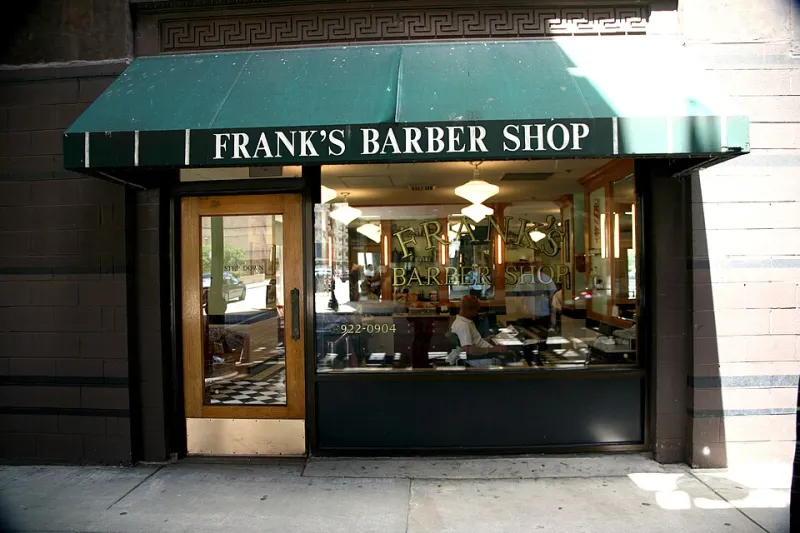
Photo: (vincent desjardins) from Paris, France, CC BY 2.0, via Wikimedia Commons
There's a barbershop on the northwest side of Chicago where a guy named Darnell has been cutting hair for 22 years. He doesn't have a podcast. He doesn't have a newsletter. He's not a certified life coach. But ask any of his regulars — and they'll tell you, without hesitation, that Darnell has talked them through layoffs, divorces, first apartments, and second chances.
"He just knows," said one customer who has been coming in since he was 14. "I don't even have to explain the context. He already has it."
This is the kind of relationship that doesn't get written about much, because it doesn't look like belonging from the outside. It looks like a haircut. It looks like a coffee order. It looks like someone wrapping flowers in brown paper. But across Chicago's neighborhoods — from Logan Square to Bronzeville, from Pilsen to Andersonville — a quiet network of informal mentorship is happening inside the city's small businesses, and it's one of the most underrated sources of community the city has.
Why Repetition Creates Depth
The magic ingredient here isn't charisma. It's time. When you return to the same person for a service — week after week, month after month — something shifts. The transaction stops being transactional. You stop being a customer and start being a story they're tracking.
Psychologists call this the "mere exposure effect" — repeated contact with the same person builds familiarity and trust in ways that feel almost involuntary. But what happens in Chicago's skilled-trade spaces goes beyond passive familiarity. These are people who are trained to pay attention. A barber reads body language while you're in the chair. A florist learns what kind of occasion you're really shopping for, not just what you say you want. A coffee roaster picks up on the difference between your Tuesday energy and your Friday energy.
That attentiveness, practiced over years, turns into something that looks a lot like mentorship — even when neither party has a name for it.
The Corner Coffee Shop That Became a Career Counselor
At a small-batch roaster in Bridgeport, the owner — who has been roasting and serving coffee in the same 400-square-foot space for nearly a decade — has watched his regulars change jobs, start businesses, get married, and move away (and sometimes move back).
"I'm not giving advice exactly," he'll tell you. "I'm just remembering. And sometimes remembering out loud is what people need."
That's the thing about these relationships: they're not formal. Nobody's booking a session. Nobody's filling out a form. The mentorship happens in the margins — in the three minutes while your espresso pulls, in the ten minutes between clients at the barber's chair, in the quiet of a flower cooler on a slow Tuesday afternoon.
For younger Chicagoans especially — people in their 20s and early 30s navigating a city that can feel enormous and anonymous — these micro-relationships can serve as an anchor in ways that apps and networking events simply can't replicate. There's no algorithm for someone who watched you come in looking defeated and remembers to ask how that thing turned out.
Pilsen's Florists and the Art of Reading a Room
Flower shops might seem like an unlikely place for deep human connection. You come in, you buy flowers, you leave. Except that's not really how it works — not in the neighborhood shops that have been around long enough to earn the trust of their streets.
In Pilsen, a family-run florist has become something of a neighborhood institution not because of their Instagram presence (though it's lovely) but because of how they handle the hard orders. The grief arrangements. The "I messed up and I need to fix it" bouquets. The "my daughter is graduating and I want her to feel seen" requests.
"Flowers are almost always about something else," the owner explained. "Nobody comes in here just wanting flowers. They come in here wanting to say something they don't know how to say."
Learning to translate that — to hear what someone actually needs and help them find it — is a skill that takes years to develop. And for the regulars who've trusted that shop through multiple seasons of their lives, the owner has become something like a wise aunt: non-judgmental, deeply practical, and genuinely invested in the outcome.
What Makes This Different From Therapy, Friendship, or Networking
It's worth naming what makes these relationships distinct — because they occupy a category that doesn't have a clean label.
They're not therapy. There's no clinical framework, no diagnosis, no treatment plan. They're not friendship exactly, either — the power dynamic is different, the intimacy is bounded by the service context, and you're not calling each other on Saturday nights. And they're definitely not networking, which tends to be transactional in a much more self-conscious way.
What they are, maybe, is witnessing. These tradespeople witness your life in a specific, consistent way over time. They hold a version of you that you might not even hold yourself — the you who was nervous before the big meeting, the you who came in exhausted after the baby was born, the you who showed up three weeks after the breakup finally looking like yourself again.
That kind of long-term witnessing creates a form of belonging that's surprisingly durable. It doesn't require vulnerability the way friendship does. It doesn't require you to perform wellness the way social media does. It just requires you to keep showing up — which, honestly, is the easiest ask.
How to Actually Build These Relationships
If you're newer to Chicago, or you've been here a while but you're still bouncing between Yelp recommendations and whoever has availability, here's the honest advice: pick one and stay.
Find a barber in your neighborhood and go back. Find a coffee shop within walking distance and make it yours. Find a florist or a tailor or a cheese shop or a wine store where someone knows your taste — and let them know yours.
It takes longer than downloading an app. It takes longer than attending a networking happy hour. But at some point, you'll walk into that shop and realize that someone in this city is genuinely glad to see you — not because you're a good customer, but because they've been watching your story unfold and they're rooting for the next chapter.
That's not a transaction. That's a community. And in a city of nearly three million people, it might be the most Chicago thing there is.