Smash It Like You Mean It: The November Ritual Where Chicago Turns Rotten Pumpkins Into Community
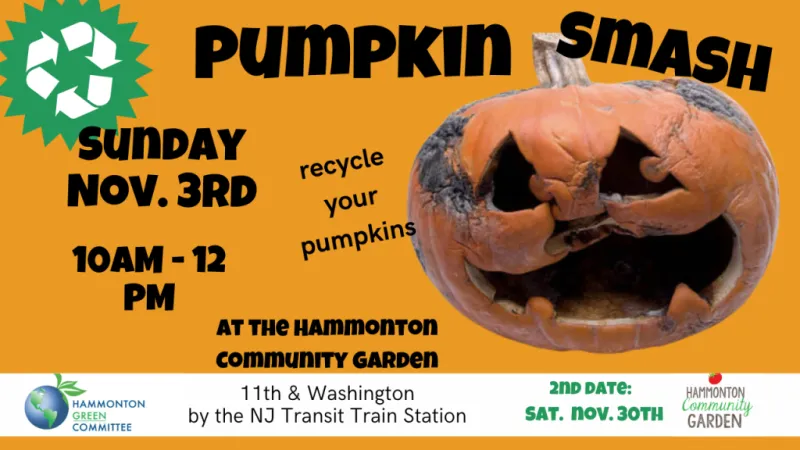
Photo: pumpkin smashing compost event community fall, via www.townofhammonton.org
Somewhere around November 3rd, your porch pumpkin enters its villain era. The face that was charming on the 31st is now collapsing inward like a failed soufflé, and you're faced with a choice: toss it in the garbage, where it will spend eternity in a landfill producing methane, or — and hear us out — carry it to a parking lot and throw it at something, surrounded by your neighbors, while somebody's kid sells hot cider.
Chicago, being Chicago, has made an event out of this. Several events, actually.
The Purge Is Real
All across the city in early November, community gardens, environmental nonprofits, and neighborhood associations host pumpkin smash and compost collection days. The premise is simple: instead of letting your jack-o'-lantern rot in a plastic bag on the curb, you bring it to a designated site where it gets composted into soil for next year's gardens. Some events are orderly drop-offs. Others — and these are the ones worth attending — involve actual smashing. Slingshots, mallets, a designated "smash zone" roped off with orange cones. One long-running event on the North Side has turned it into a full festival, with seed-saving stations, chili, and a line of wagons full of gourds that stretches down the block.
The environmental case is straightforward. Food waste in landfills generates methane, a greenhouse gas far more potent than CO2, and pumpkins are the poster child of seasonal food waste — hundreds of millions of pounds get tossed nationwide every fall. Composting one pumpkin is a small thing. Composting a whole neighborhood's pumpkins is a small thing multiplied by a whole neighborhood, which is basically the thesis of this website.
But the Compost Isn't Really the Point
Here's what actually happens at these events, based on several years of standing in cold parking lots watching people throw vegetables: they talk to each other.
You show up carrying a decomposing pumpkin, which is inherently a little funny, and funny is the great icebreaker. Somebody compliments your kid's carving technique from a week ago. Someone asks if you compost at home and suddenly you're getting a tour of the community garden's three-bin system and an invitation to the spring workday. A guy from two doors down — you've nodded at him for two years, nothing more — mentions he has a wood chipper, and now you know a guy with a wood chipper.
There's a seed swap, usually. Scoop the seeds out of the wreckage, dry them, roast some with salt, and plant the rest come spring. It's the entire cycle of a neighborhood in miniature: something festive, something messy, something that grows back better next year because people showed up.
Throwing Things Away, Together
We'll go ahead and say the opinion part out loud: we think this is one of the best ideas this city has. Not because of the methane math — though that's real — but because it proves that anything can be a gathering if someone decides it is. If a rotting gourd can get forty people into a church parking lot in November, then the barrier to community was never really the activity. It was the invitation.
So this year, skip the trash can. Find your local compost site or smash event — community gardens, park advisory councils, and neighborhood Facebook groups are all over it by late October. Bring your pumpkin. Bring your neighbor's pumpkin too, because they forgot, and that's what neighbors are for.
And when some stranger hands you a mallet and points at a tarp full of gourds? Take the mallet. This is what belonging looks like: a little messy, a little cold, better when everyone's there.