Third Shift, First-Name Basis: Chicago After Midnight Has Its Own Neighborhood
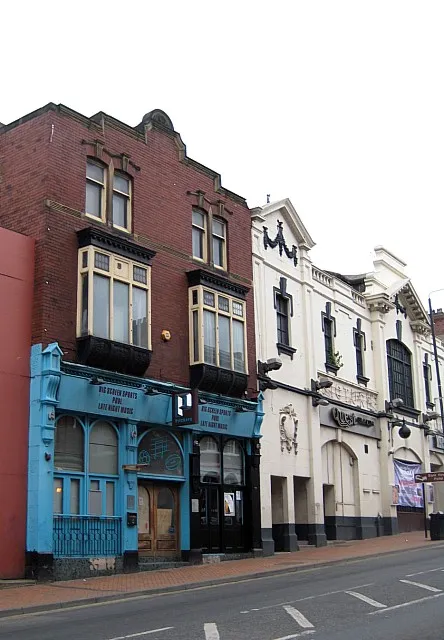
Photo: Mike Kirby, CC BY-SA 2.0, via Wikimedia Commons
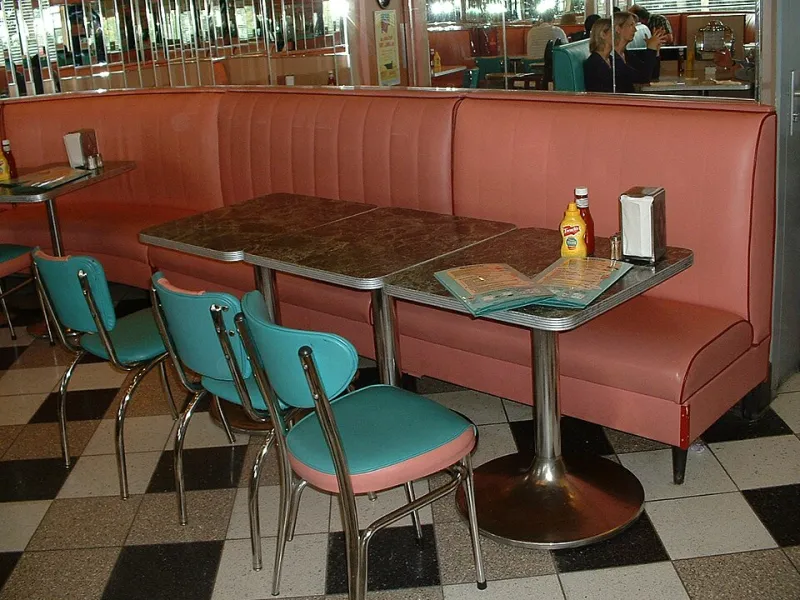
At 2:40 in the morning, a woman in scrubs slides onto the fourth stool at a counter on the South Side and orders the same thing she always orders. The waitress doesn't ask. Three seats down, a warehouse team lead is eating eggs with the intensity of a man who has to be back at work in eight hours. The owner is refilling coffee and complaining about the Hawks, badly, to no one in particular, and it is the friendliest room in the city.
Nobody here is having a night out. They're having a night in — in the sense of, in the shared space, in the loop, in the routine. This is the other Chicago, the one that runs from roughly midnight to six, and it has its own regulars, its own geography, and its own very particular form of belonging.
The Map Redraws Itself
Ask a day-shift person where the city's social life lives and they'll name a dozen bars. Ask a night-shift person and they'll name a diner in Bridgeport with a counter that hasn't been reupholstered since the Reagan administration, a corner store in Little Village where the clerk knows exactly which energy drink is for which shift, and a 24-hour gym in Avondale where the 3 a.m. crowd has a loose but real understanding about sharing the squat rack.
What unites these places isn't a scene. It's timing. Nurses coming off a 12, bakers four hours into the day, drivers taking a break, bartenders decompressing after last call — people whose schedules overlap almost nowhere else in the week. On the street during rush hour, they're invisible to each other. At 2 a.m. at a counter, they're colleagues.
The Shift-Change Handshake
The most reliable social ritual in night-shift Chicago is the overlap. Hospital staff change over around 7 and 7. In a bakery, the mixer is done and the proofing starts before the sun even thinks about it. Warehouse crews hand off belts. Bar staff close at 4 and hand the city back to whoever's opening.
Those overlaps produce a very specific kind of relationship: people who know your job, your schedule, and your general mood at any given hour, but almost nothing else about you. And weirdly, that's enough. It's not shallow. It's specialized. A night-shift person doesn't need a friend who can do everything; they need one who is awake.
What the Counter Gives You
A diner at 2 a.m. is not a great restaurant. It doesn't have to be. It's a room where you can sit alone without anyone treating your aloneness as a problem, and where the woman behind the counter will notice if you don't order your usual.
The same goes for the bodega. The night clerk at a corner store on any arterial in this city is a one-person neighborhood watch, information desk, and mental health safety net, usually for the price of a purchase and a few minutes of conversation. He knows whose dog got out. He knows who's working double shifts this week. He knows which cab company actually picks up at 3 a.m. in this weather.
And the 24-hour gym, for all its fluorescent grimness, is doing community work nobody asked it to do. There's something about lifting weights at an hour when the world is asleep that flattens hierarchy. Nobody's in a hurry. People spot each other.
The Etiquette of the Late Room
If you're a day-shift person who wants to see this Chicago — and you should, at least once — here's how not to ruin it.
Go on a Tuesday, not a Saturday. Saturday night is tourists and chaos. Tuesday at 2 a.m. is the actual city.
Don't ask why someone's awake. They're at work, or they just got off it, or they're on their way in. It's not a conversation starter; it's a rude question with a boring answer.
Order something. You're a customer in someone else's living room, and the transaction is what buys you the seat.
Don't treat the staff like an exhibit. The waitress at 3 a.m. is running a shift, not a podcast episode.
Read the room. Some late rooms are loud and communal. Some are church-quiet. Match the volume you find.
Go twice. Once is tourism. Twice is a beginning.
What the Day Shift Can Steal From This
The lesson of the night shift isn't that you should stay up later. It's that belonging doesn't require peak hours, a crowd, or a good time. It requires a place that's open at the same time you are, and a willingness to come back.
Most of us are waiting for the perfect room — the one that's hip enough to be interesting and familiar enough to be comfortable. The night shift is proof you can skip all that. The diner's not cool. The gym's not cool. The bodega is a bodega. But the clerk there has known the same six people for a decade, and they'd all notice if he wasn't at the counter.
Find a place open at the hour you're actually free — not the hour you wish you were free — and go until it's boring. Boring is where the whole thing starts.