Four Chords and a Front Door: Inside Chicago's Basement Scenes Where the Audience Joins the Band
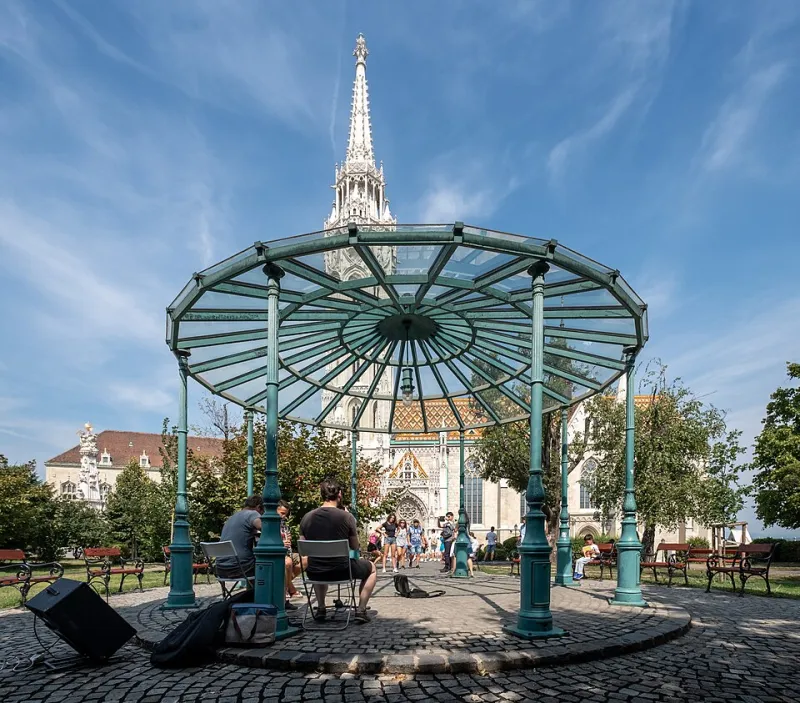
Photo: Jules Verne Times Two, CC BY-SA 4.0, via Wikimedia Commons
There's a moment at every good basement show that doesn't happen at the United Center. Somewhere around the third song, somebody in the crowd leans over and asks the person next to them: do you play?
In Chicago's DIY music world, that question is basically a handshake. And more often than not, the answer leads to somebody borrowing a guitar by the end of the night.
The House Show Is the Original Third Place
Ask around any neighborhood scene — Pilsen, Rogers Park, Humboldt Park, the stretch of Logan Square where the flats have basements deep enough to muffle a drum kit — and you'll hear versions of the same origin story. Nobody planned to become a musician. They went to a show. They came back. Then somebody handed them a tambourine and ruined their life in the best way.
Marisol Vega, 29, runs a semi-regular show series out of her cousin's Pilsen basement, a space with low ceilings, a fog machine held together with duct tape, and a strict no-guest-list policy because, as she puts it, "everyone's a guest."
"I've watched people walk in alone on a Friday and leave with a band," she says. "Not a contact. A band. Like, they're texting about practice on Sunday. Where else does that happen?"
She's not wrong. Research on adult friendship keeps hammering the same point: proximity plus repetition plus vulnerability equals connection. A jam session is all three, compressed into two hours and one shared amp.
Rogers Park, Where the Open Mic Runs Itself
Up on the far North Side, the open mic at a certain lakeside coffeehouse (the organizers asked us not to make it too findable — capacity is capacity) operates on a simple rule: sign up to perform, stay to support. Nobody leaves after their set. Everyone stays for the 19-year-old poet who's never read in public and the retired CPS teacher debuting ukulele originals.
Devon Okafor, 34, a software developer by day, showed up two years ago intending only to listen.
"I hadn't touched a bass since college," he says. "Some guy playing the blues said his bassist couldn't make it next month. I said 'I own a bass.' That was it. That was the whole audition."
His band now rehearses in a Rogers Park church basement, plays two or three gigs a season, and — crucially — has a group chat that is 40% logistics and 60% life updates. Job changes. A breakup. A baby. The music is the excuse; the belonging is the point.
Why Making Music Beats Watching It
There's a reason the DIY scene converts listeners faster than, say, a bowling league converts strangers. Music is collaborative by default. You can't half-participate in a three-chord song. Either you come in on the downbeat or you don't, and the forgiveness built into sloppy garage renditions is a powerful social lubricant.
"Being bad together is the fastest bonding agent there is," says Theo Brandt, 41, who books house shows in Avondale. "Nobody's auditioning. The second someone apologizes for messing up, the whole room loves them more."
That low-stakes, high-warmth combination is exactly what adult social life usually lacks. Work friendships are cautious. Apps are exhausting. But nobody's networking over a feedback pedal.
How to Get In (Yes, Even If You've Never Played)
The scene is friendlier than its flyer aesthetic suggests. A few on-ramps:
- Follow the flyers, literally. Coffee shops, record stores, and library bulletin boards in Pilsen, Logan Square, and Edgewater are still the scene's real homepage.
- Show up twice. The first time, you're a stranger. The second time, you're a regular. The third time, someone hands you a shaker.
- Bring anything. Harmonica, cajón, a decent voice. Basement shows run on whatever walks in the door.
- Support the openers. Staying for the whole bill is the scene's currency. It's how you get invited back — and how you get invited in.
- Don't worry about gear. Somebody always has a spare cable, a spare pick, a spare everything.
The Sound of a City That Lets You In
Chicago has always had a mainstream music legacy — the blues, the drill scene, the symphony. But the basement circuit is the city's social infrastructure operating at whisper volume. It's mutual aid with a distortion pedal: passing the hat for rent, sharing amps, sharing meals, sharing lives.
Vega puts it plainly, folding cable in her cousin's basement an hour after the last band packed up.
"People say Chicago is a city of neighborhoods. This is what they mean. Not the slogan — the actual thing, where you know whose house you're welcome at."
Four chords. One basement. A whole crew you didn't have in September. That's the deal, and the door — like the venue — is technically someone's house. Which means you're not going to a show. You're going to a neighbor's.
Belonging Chicago's tip jar: if you attend a house show, bring cash for the band and leave the venue cleaner than you found it. The scene runs on both.