It Started With a Permit: The Neighbors Who Turn Chicago Streets Into Summer Living Rooms
The Person With the Clipboard
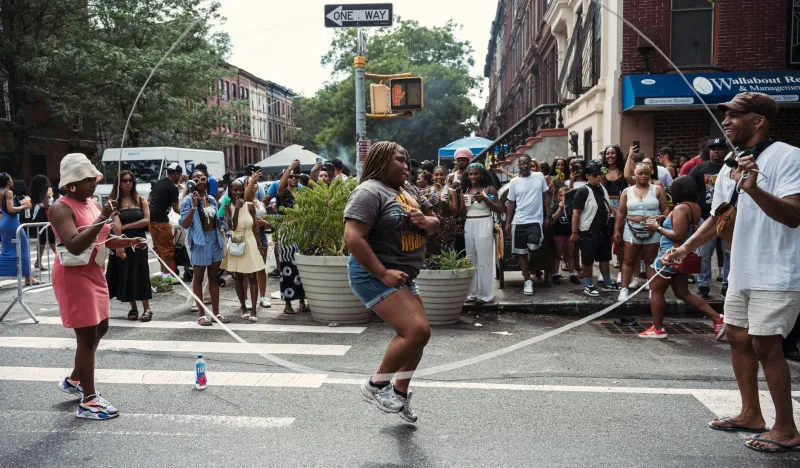
If you've ever wandered into a Chicago block party — the smell of char on the grill, a folding table sagging under someone's abuela's rice, kids sprinting through a fire hydrant's spray — you've probably never noticed the most important person there. They're not at the center of the photo. They're the one checking wristbands, refilling the water jug, and quietly making sure the DJ's extension cord doesn't cross the bounce house.
On West Berteau in North Center, that person is Maria Delgado, a 54-year-old retired CPS secretary who has organized her block's party for eleven straight summers. "The first year, I think nine households showed up," she laughs. "Last August, we had over a hundred people, two bands, and a guy who drove in from Gary because he heard about it from his cousin."
Delgado's secret weapon isn't charisma, though she has plenty. It's persistence. She starts planning in March. She files the city's special event paperwork before the warm weather even feels real. And every year, she knocks on the doors of neighbors who've never once come outside.
Why It Matters More Than Ever
Chicago has always had a complicated relationship with the word "neighborhood." We define ourselves by it — Bridgeport, Pilsen, Hegewisch, Rogers Park — but actually knowing the people on your block? That's rarer than the pride suggests. Surveys on American social isolation keep telling us what we already feel: fewer close friends, less casual contact, more evenings spent behind closed doors.
Block parties are the antidote hiding in plain sight. They're one of the few remaining civic rituals where you're guaranteed to meet the person whose trash cans sit next to yours, whose kid will someday babysit your kid, whose car you'll need to move when the street sweeps.
"People say hi at the party and then they're done being strangers," says Delgado. "By September, folks are texting each other about a package delivery. That's the whole point."
The Unpaid Labor of Belonging
Here's what nobody tells you about block party organizers: it's a second job that pays nothing.
In Jefferson Park, Dan Kowalczyk handles the logistics for his block's annual bash — a role he inherited, reluctantly, in 2019. His to-do list reads like a small-scale festival production: apply for the street closure through 311, coordinate with neighbors on Alderman approval, rent tables from the church down the block, collect $20-per-household contributions, and track down the three grills that mysteriously never return home.
"The permits are honestly the easy part," he says. "The hard part is the awkward stuff. Someone's music is too loud. Somebody's dog bit somebody's kid. You're the mediator now. You didn't ask for it, but you're it."
Kowalczyk's advice for handling the friction: get ahead of it. He sends out a one-page flyer each June with the ground rules — music off at 8, no glass near the bounce house, everyone helps with teardown. "Boring, but it works. Nobody fights about rules they saw coming."
A How-To for Your Own Street
Inspired to close your own block next summer? Here's the short version of what our organizers wish they'd known on day one:
Start small and early. File your special event permit application with the city at least a few weeks out — summer Saturdays fill up fast, and your aldermanic office can help navigate the process. Aim for a date in late July or August when vacation schedules thin out.
Recruit a co-conspirator. Every organizer we spoke to insisted on this. One person handles paperwork; the other handles people. You'll trade off burnout.
Go door to door — in person. A flyer in the mailbox gets ignored. A knock and a two-minute conversation gets attendance. Bring a sign-up sheet and a pen.
Ask everyone to bring something. Nobody should feel like a guest at their own block party. One household brings folding chairs, another brings a cooler, someone else brings the boombox. Contribution creates ownership.
Plan the potluck, not the party. You don't need a bouncy castle. You need a long table, something to grill, and a reason for people to linger. The lingering is the whole event.
Do it again next year. The first one is awkward. The second one is tradition. That's just how it works.
The Long Game
Back on West Berteau, Delgado is already collecting names for next summer's list — even though this year's party ended three weeks ago. A new family with a toddler moved in down the block; she flagged them immediately. A widower who used to skip the party now judges the salsa contest.
"People think community is something you find," she says, wiping down the folding tables as the last stragglers drift home. "It's not. It's something you file a permit for."
Summer in Chicago is short. The people who make it feel long — who stretch a single July Saturday into year-round connection — are some of the most quietly essential residents this city has. Maybe it's time your block met yours.